Wednesday, November 1, 2023. 12:00 a.m. – 1:30 p.m. The Forum SIE Complex, Denver University, Colorado. Speakers: David Smilde Charles A. and Leo M. Favrot Professor of Human Relations, Tulane University. William Neumann Journalist. Francisco Rodriguez Director, Oil For Venezuela. Rice Family Professor Josef Korbel School, Denver University Moderator: Paula Ramón. Journalist, Agence France-Presse.
Author Archives: Francisco R. Rodríguez
Impact of Unilateral Sanctions on Health-Related SDGs
Wednesday, September 20, 2023. Side Event during the 54th Session of the UN Human Rights Council, Geneva. Click here to watch the video Speakers: Hector Constant Rosales Permanent Representative of Venezuela to the United Nations Office Michael Fakhri UN Special Rapporteur on the right to food Francisco Rodriguez Director, Oil For Venezuela. Rice Family Professor JosefContinue reading “Impact of Unilateral Sanctions on Health-Related SDGs”
Season 2, Episode 14: Francisco Rodriguez, The Human Consequences of Economic SanctionsVenezuela Negotiations: Light at the End of the Tunnel?
Tuesday, August 22, 2023. Book Club with Jeff Sachs Podcast Click here to watch the episode Interviewd: Francisco Rodriguez Director, Oil For Venezuela. Rice Family Professor Josef Korbel School, Denver University Interviewer: Jeffrey Sachs Director, Center for Sustainable Development, Columbia University
Sanctions and Human Development
How much have sanctions, and other politically induced restrictions on economic activity, affected the Venezuelan economy? How much of the country’s decline can be attributed to these causes, as opposed to the more standard causes of poor policies and external shocks? In this paper I offer a quantification of the effect of alternative causes. The bottom line is that around half of the country’s economic contraction between 2012 and 2020 can be explained as a result of sanctions and other politically induced restrictions such as the withdrawal of government recognition.
The Global Seigniorage Duopoly
How much have sanctions, and other politically induced restrictions on economic activity, affected the Venezuelan economy? How much of the country’s decline can be attributed to these causes, as opposed to the more standard causes of poor policies and external shocks? In this paper I offer a quantification of the effect of alternative causes. The bottom line is that around half of the country’s economic contraction between 2012 and 2020 can be explained as a result of sanctions and other politically induced restrictions such as the withdrawal of government recognition.
Un Pacto por el Futuro de Venezuela

Venezuela necesita un nuevo espacio de discusión que nos permita centrar el debate público en lo verdaderamente relevante: articular una visión que nos ayude a reencontrarnos como nación. A lo largo de la última década, Venezuela atravesó el mayor colapso económico documentado en un país en tiempos de paz. Entre 2012 y 2020, elContinue reading “Un Pacto por el Futuro de Venezuela”
Opinión de la Corte de Delaware en caso Citgo
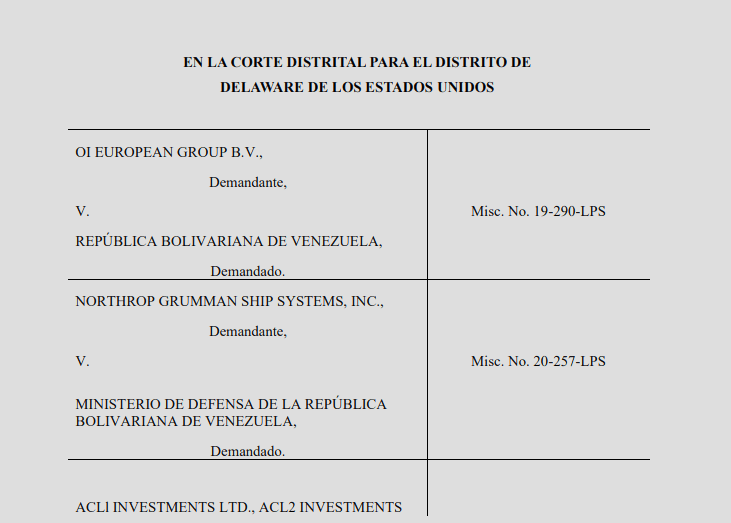
El 23 de marzo de 2023, el Juez Leonard Stark de la Corte Distrital de Delaware emitió una orden determinando que el Gobierno Interino de Venezuela encabezado por Juan Guaidó había ejercido control extensivo sobre PDVSA, lo que permitía que los acreedores de Venezuela ejerciesen acciones de embargo sobre las acciones de la casa matrizContinue reading “Opinión de la Corte de Delaware en caso Citgo”
How Clientelism Works: Evidence from the Barinas Special Election
Published in the World Development Journal Do politicians target the benefits of social programs to party loyalists or to swing voters? Traditional tests of this question are clouded by an identification problem caused by the simultaneity of politician and voter choices to participate in the exchange of assistance for votes. I use the holding ofContinue reading “How Clientelism Works: Evidence from the Barinas Special Election”
Quantifying Venezuela’s Destructive Conflict
How much have sanctions, and other politically induced restrictions on economic activity, affected the Venezuelan economy? How much of the country’s decline can be attributed to these causes, as opposed to the more standard causes of poor policies and external shocks? In this paper I offer a quantification of the effect of alternative causes. The bottom line is that around half of the country’s economic contraction between 2012 and 2020 can be explained as a result of sanctions and other politically induced restrictions such as the withdrawal of government recognition.
Revisiting the opposition’s debt restructuring guidelines
On July 3, 2019, the opposition-appointed Office of the Special Attorney General of Venezuela published a document outlining the principles for the country’s eventual debt restructuring. On March 23, 2023, Delaware District Court Judge Leonard Stark cited this document as proof of the lack of appropriate separation between the management of the country’s oil industryContinue reading “Revisiting the opposition’s debt restructuring guidelines”
 Francisco R. Rodríguez