Between 2012 and 2020, Venezuela’s per capita income fell by 73.8%, the largest peacetime economic contraction documented in the Common Era—and it unfolded under a government that had come to power promising to redirect the country’s wealth toward its poor. We trace how Venezuela’s social policy first expanded, during the oil boom, into a universalisticContinue reading “Social Policy in Venezuela’s Bolivarian Revolution: From Universalism to Politicized Targeting”
Tag Archives: Venezuela
On the implausibility of the benign sanctions hypothesis
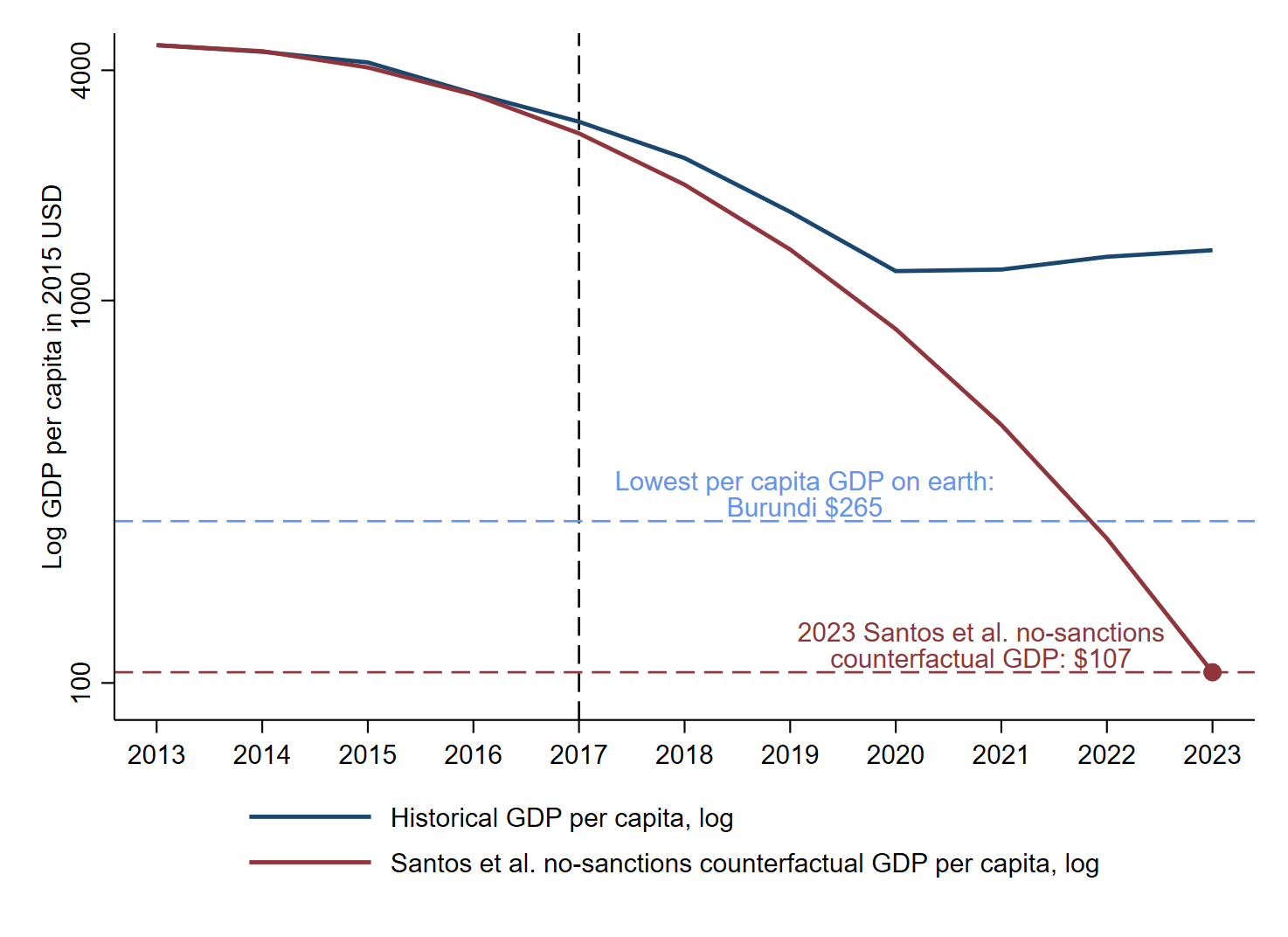
Santos, Morales-Arilla and Partipilo Cornielles (2026) claim that in the absence of sanctions Venezuela’s rate of contraction would have accelerated by approximately 6 percentage points a year. Their projections imply an implausible 98% decline in GDP in a non-sanctions scenario. This would have caused Venezuela’s per capita GDP in the absence of sanctions to fallContinue reading “On the implausibility of the benign sanctions hypothesis”
The Role of Sanctions in Venezuela’s Collapse: A Critical Comment on Santos et al. (2026)
Santos, Morales and Partipilo Cornielles claim that the bulk of the decline in Venezuela’s income preceded the imposition of economic sanctions and that the rate at which the economy contracted did not accelerate after sanctions. Both claims are false. Even if they were true, they would support the authors’ conclusions only if one were toContinue reading “The Role of Sanctions in Venezuela’s Collapse: A Critical Comment on Santos et al. (2026)”
A Peace Prize That Brings Venezuela Closer to War
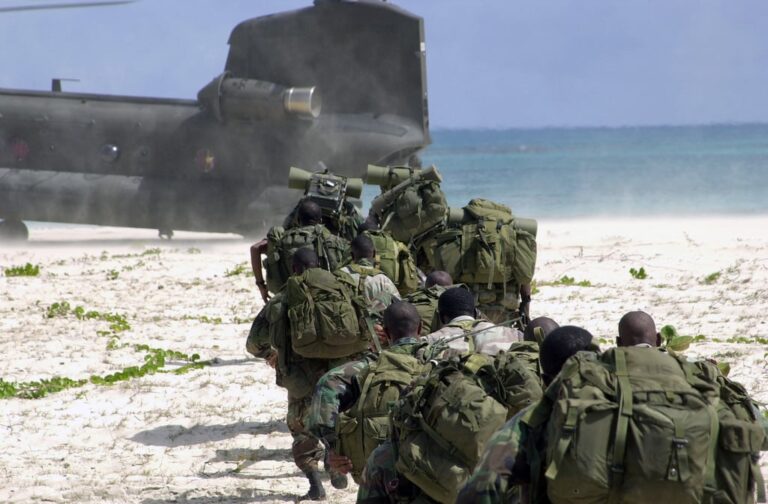
By throwing the moral authority of the prize behind an advocate of the use of force, the Nobel Committee’s decision makes a peaceful, negotiated solution to Venezuela’s conflict less likely. Last week, the Norwegian Nobel Committee awarded the 2025 Peace Prize to María Corina Machado—a leading figure in the country’s opposition to the authoritarian ruleContinue reading “A Peace Prize That Brings Venezuela Closer to War”
Un premio de la paz que acerca a Venezuela a la guerra
Al respaldar con el premio a quien ha abogado consistentemente por el uso de la fuerza, la decisión del Comité Nobel hace menos probable una solución pacífica y negociada al conflicto venezolano. La semana pasada, el Comité Noruego del Nobel otorgó el Premio Nobel de la Paz 2025 a María Corina Machado, una destacada dirigenteContinue reading “Un premio de la paz que acerca a Venezuela a la guerra”
Sanctions and Venezuelan Migration
This paper examines the potential impact of different US economic sanctions policies on Venezuelan migration flows. I consider three possible departures from the current status quo in which selected oil companies are permitted to conduct transactions with Venezuela’s state-owned oil sector: a return to maximum pressure, characterized by intensive use of secondary sanctions, a moreContinue reading “Sanctions and Venezuelan Migration”
Scorched Earth Politics and Venezuela’s Collapse
Between 2012 and 2020, Venezuela’s per capita income declined by 71%, the largest peacetime economic contraction documented in the Common Era. I estimate that the severing of the country’s links to global trade and financial markets explains 56% of this contraction. I propose an explanation of Venezuela’s economic collapse as a consequence of the incentivesContinue reading “Scorched Earth Politics and Venezuela’s Collapse”
Sanctions and Human Development
How much have sanctions, and other politically induced restrictions on economic activity, affected the Venezuelan economy? How much of the country’s decline can be attributed to these causes, as opposed to the more standard causes of poor policies and external shocks? In this paper I offer a quantification of the effect of alternative causes. The bottom line is that around half of the country’s economic contraction between 2012 and 2020 can be explained as a result of sanctions and other politically induced restrictions such as the withdrawal of government recognition.
Un Pacto por el Futuro de Venezuela

Venezuela necesita un nuevo espacio de discusión que nos permita centrar el debate público en lo verdaderamente relevante: articular una visión que nos ayude a reencontrarnos como nación. A lo largo de la última década, Venezuela atravesó el mayor colapso económico documentado en un país en tiempos de paz. Entre 2012 y 2020, elContinue reading “Un Pacto por el Futuro de Venezuela”
Quantifying Venezuela’s Destructive Conflict
How much have sanctions, and other politically induced restrictions on economic activity, affected the Venezuelan economy? How much of the country’s decline can be attributed to these causes, as opposed to the more standard causes of poor policies and external shocks? In this paper I offer a quantification of the effect of alternative causes. The bottom line is that around half of the country’s economic contraction between 2012 and 2020 can be explained as a result of sanctions and other politically induced restrictions such as the withdrawal of government recognition.

